
5 October 2026
Wind, Not Rain: Why Weymouth Roofs Fail And What To Look For
Weymouth is dry by UK standards but very windy. How wind lifts slates, cracks ridges and drives rain into roofs, and the warning signs to check from the ground.
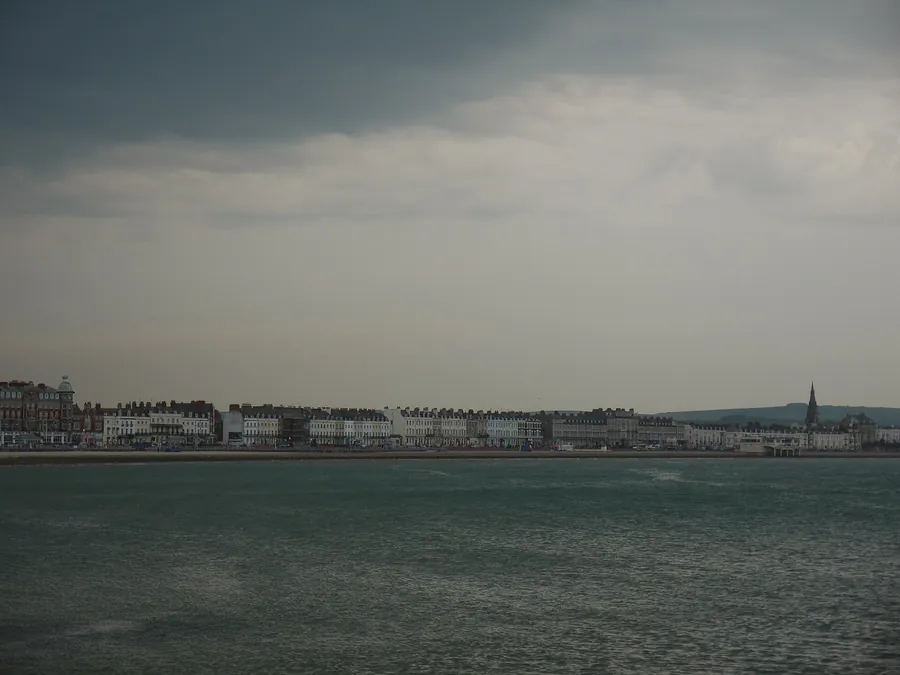
Ask most people what damages roofs and they’ll say rain. In Weymouth that’s only half right. The Met Office’s Wyke Regis station averages about 770mm of rain a year, roughly two thirds of the UK figure, and Portland gets less still at around 672mm. What this coast does have is wind. Portland’s mean wind speed is about 14.3 knots, some 54% above the UK average, and in February 2022 Storm Eunice sent a 90mph gust across the island. Most of the year’s rain also falls in the windy winter months, so when it does come, it comes sideways. That combination is what finds the weak points in a roof. This guide explains how wind damages roofs around Weymouth and what you can check yourself, safely, from the ground.
Why a dry town still gets leaking roofs
Rainfall totals don’t tell you much about how water gets into a roof. Steady vertical rain runs off slates and tiles the way it’s meant to. Wind-driven rain doesn’t.
When a gale pushes rain across a roof, it can force water up under the laps between slates, into gaps along the verge and behind flashings. A roof that copes perfectly well with a wet, still week can leak in a twenty-minute squall off the bay. That’s why we see so many leaks in Weymouth that only show up “when the wind’s in a certain direction”. If that sounds familiar, our roof repairs page explains how we trace them.
The shelter that isn’t
Weymouth itself sits partly in the lee of Portland and Chesil Beach, which take the brunt of south-westerly gales. But wind funnels round the Nothe and across the bay, and houses on high ground at Wyke Regis, Preston or Southill get far less shelter than those down by the harbour.
How wind actually damages a roof
Wind doesn’t just push on a roof. As it passes over the ridge it creates suction on the far side, which tries to lift slates and tiles off.
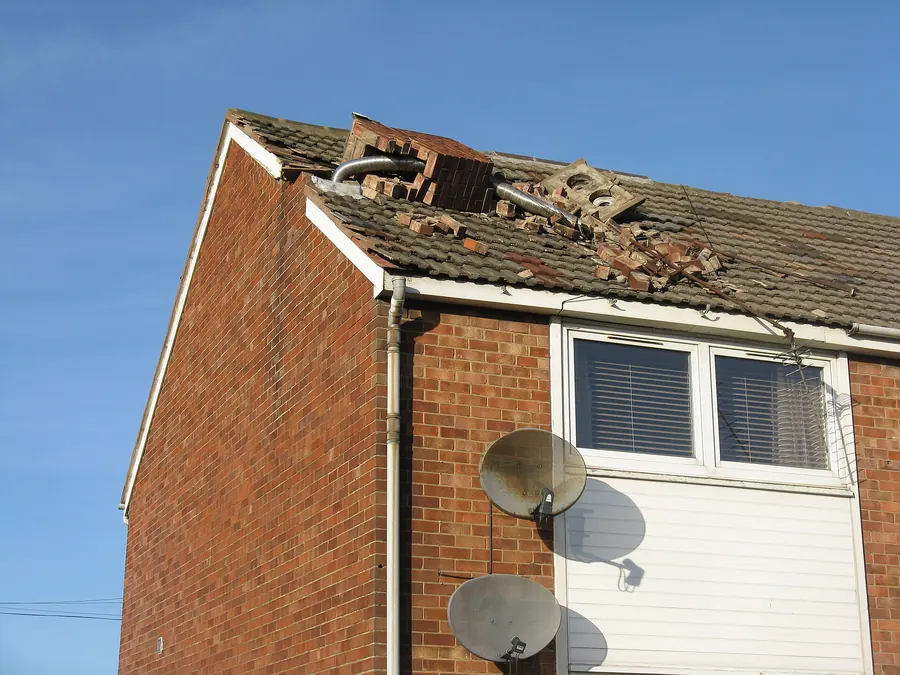
Older roofs were often fixed only at the top of each slate, or tiles were hung on battens and left to sit on their own weight. Over decades nails rust, battens soften and fixings loosen. Then one gust lifts a slate, the next one takes it, and the gap exposes the underlay or battens beneath.
This is why the current code of practice, BS 5534, was tightened in 2014. Single-lap tiles must now all be mechanically fixed, and ridge and hip tiles need mechanical fixing rather than relying on mortar. The Roof Tile Association’s overview of the revised standard explains the changes in more detail.
The weak spots wind finds first
Some parts of a roof take far more punishment than others. When we survey after a storm, these are where we look first.
Ridges and hips
The ridge is the highest, most exposed line on the roof. Older ridge tiles bedded only in mortar crack and loosen as the mortar ages, and a gale can lift a run of them in one go.
Verges
The verge is the edge of the roof at the gable end. Mortar verges crack, and once wind gets under the edge tiles it can peel them back. Dry-fix verge systems are much more secure.
Chimney flashings and valleys
Lead flashings that were stuck on with mastic, or pieces that were cut too long, lift and split. Valleys collect water from two slopes, so any gap there lets in a lot of it.
Storm history on this stretch of coast
Big storms are part of life here, and they leave a record. The Great Gale of November 1824 destroyed Weymouth’s esplanade and flooded much of the lower town, and at Chiswell on Portland 80 houses were destroyed.
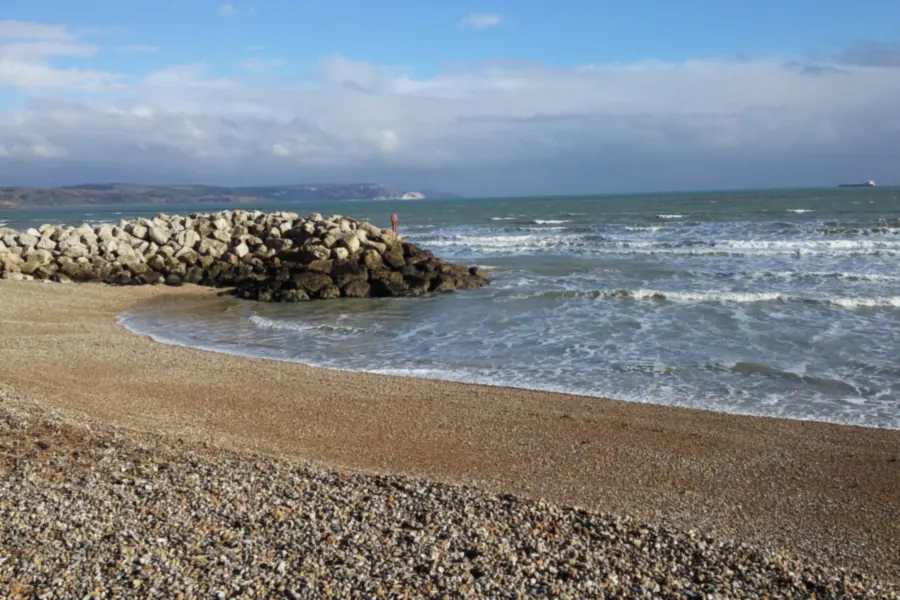
More recently, the storms of winter 2013-14 battered Chesil Cove and Chiswell, moving huge amounts of shingle and leading to hundreds of thousands of pounds of sea defence repairs. Storm Eunice in 2022 was described by the Met Office as the most severe storm to hit England and Wales since February 2014; its Met Office storm report records the 90mph gust at Portland. Storm Ciarán followed in November 2023 with a 72mph gust at Portland.
The point isn’t to alarm anyone. It’s that roofs here need to be built for those days, not for an average one.
What to check from the ground after a gale
You can learn a lot without going anywhere near a ladder. Please don’t climb onto a roof yourself.
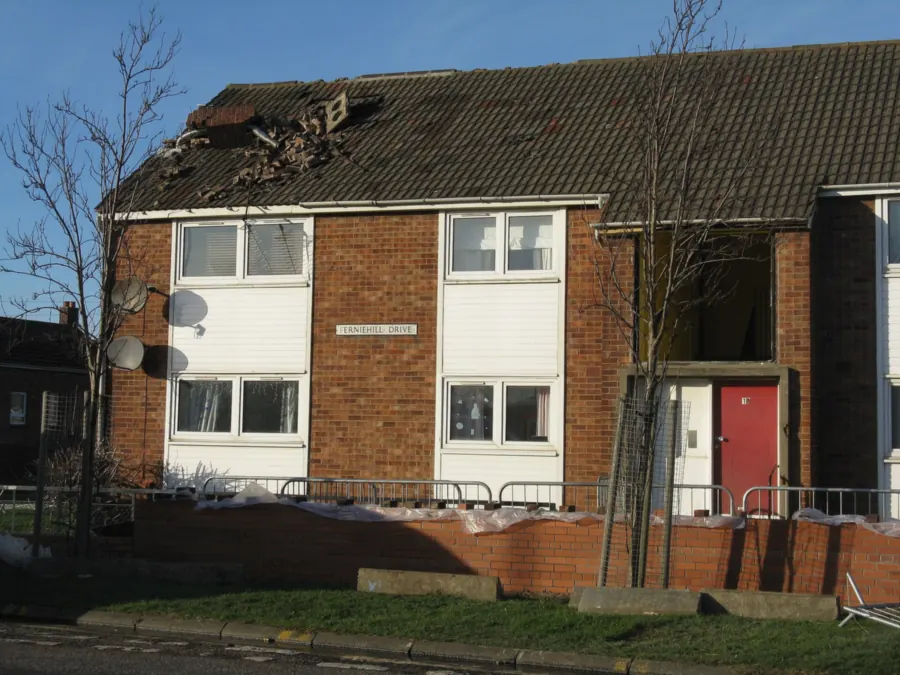
Walk round the house and look for slates or tiles that are out of line, missing or lying in the garden. Look along the ridge for gaps or tiles sitting crooked. Check around the chimney for lifted lead. Look at the gutters for pieces of slate, granules or mortar, and see if any run has been pulled away from the fascia.
Then look in the loft, ideally on a bright day. Daylight showing through, damp patches on the underside of the roof or wet insulation all point to a problem worth getting checked.
Making an older roof stand up to the wind
You don’t have to replace a roof to make it far more secure. Most of the improvement comes from fixing, not from the slates or tiles themselves.
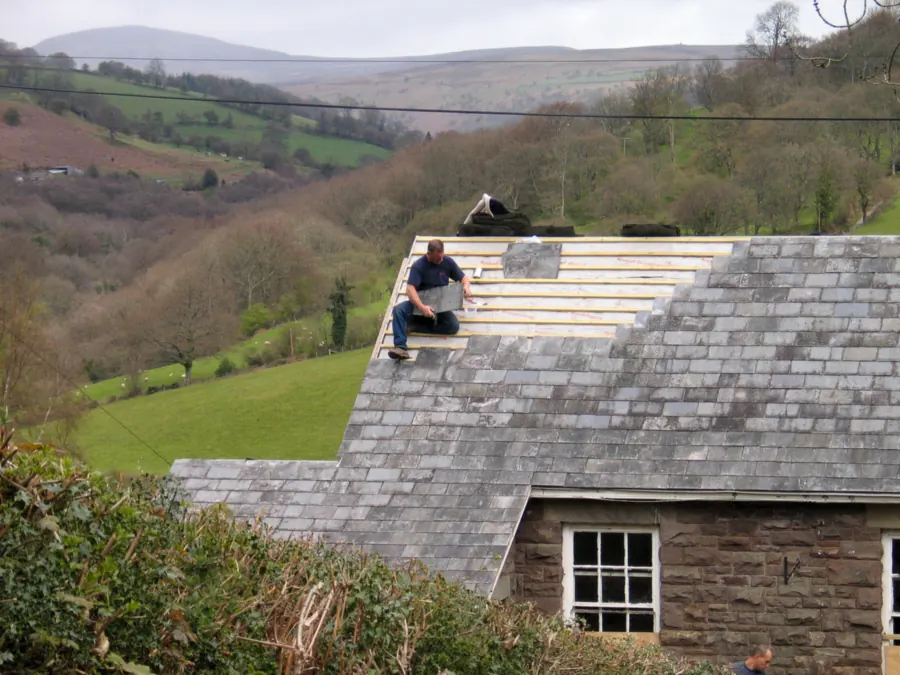
When we repair an older slate roof, replacement slates go back with copper nails or stainless hooks rather than being tucked in and left. Loose ridge tiles can be re-bedded with a mechanical fixing, or replaced with a dry-fix ridge system that doesn’t depend on mortar at all. Mortar verges, which crack and let the wind under the edge tiles, can be swapped for a dry verge system. Lead that was stuck on with mastic gets cut out and replaced properly, wedged into the mortar joint and cut to safe lengths.
Inside, a quick look at the underlay matters too. Torn or perished felt lets wind pressurise the roof space and push up from underneath. If that’s the state of most of the roof, it’s usually the sign that a full re-roof is closer than a patch.
Repair now or plan a new roof?
A storm often reveals the general state of a roof as well as the immediate damage.
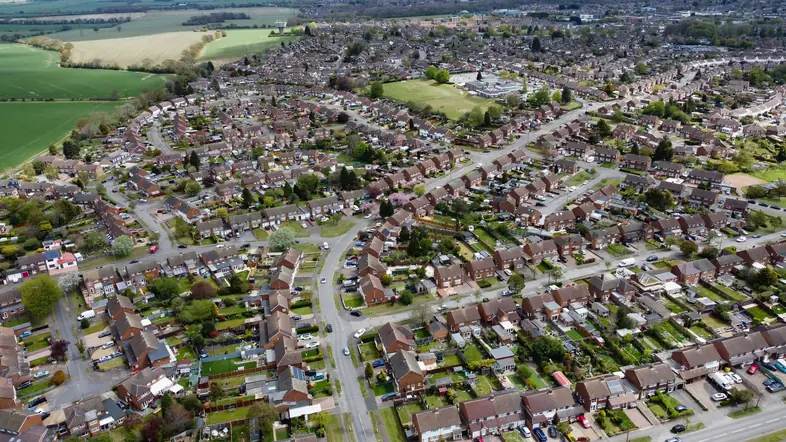
If the damage is a few slates or one section of ridge on an otherwise sound roof, a proper repair with the right fixings is the sensible answer. If slates are slipping all over, the nails have rusted through or the underlay has perished, the roof may be telling you it’s near the end. In that case it’s worth reading our guide to what a new roof costs in Weymouth so you can plan rather than react.
Either way, a free survey will tell you which you’re dealing with.
Frequently asked questions
Is Weymouth a windy place for roofs?
Yes. The Met Office's Isle of Portland station records a mean wind speed of about 14.3 knots, roughly 54% above the UK average, while rainfall is only around 58% of the national figure. Wind, and the rain it drives sideways, does more damage to local roofs than rainfall alone.
What should I check after a storm?
From the ground, look for slipped or missing slates and tiles, gaps along the ridge, lifted lead around chimneys, debris in the garden and gutters pulled out of line. Inside, check the loft for daylight or damp patches. Don't climb onto the roof yourself.
Can old roofs be made more wind resistant?
Often, yes. Replacing slipped slates with proper fixings, mechanically fixing ridges and verges, and renewing perished underlay all improve a roof's resistance to wind. When a roof is replaced, current standards require far better fixing than most older roofs ever had.
Want a roofer to take a look?
Free surveys and fixed written quotes across Weymouth, Portland and nearby towns.